Robert Garrett and the Changing Landscape of Healthcare Strategy
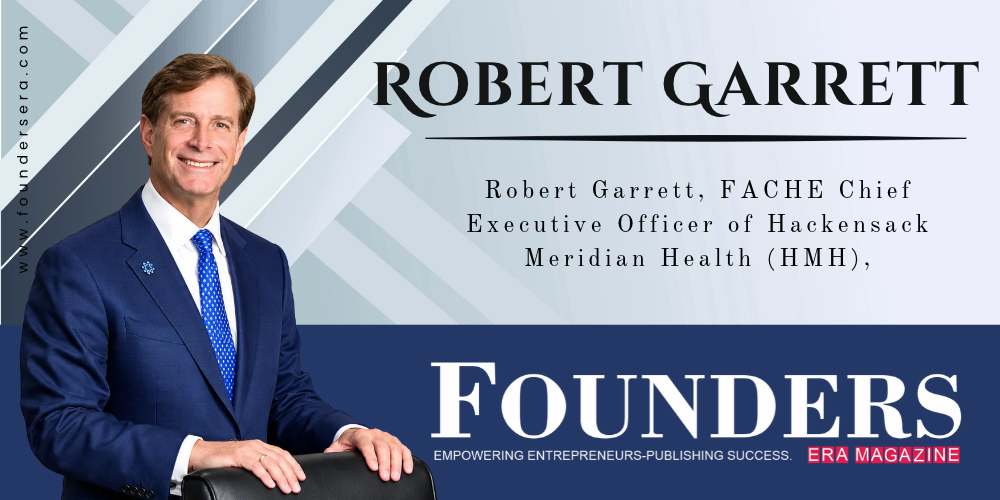
Steve Walsh’s appointment as President and CEO of the American. Robert Garrett, FACHE, is the Chief Executive Officer of Hackensack Meridian Health (HMH), one of New Jersey’s largest and most comprehensive health networks. Hackensack Meridian Health’s current executive leadership page lists Garrett as CEO, while the organization continues to broaden its emphasis on clinical excellence, innovation, access and patient-centered care. Hackensack Meridian Health
Healthcare leadership today encompasses more than just managing hospitals. Large health systems must consider technology, workforce development, access to care, financial sustainability, research, patient experience and community needs at the same time. This makes healthcare strategy particularly important.
Under the leadership of Garrett, Hackensack Meridian Health has continued to pursue a varied transformation agenda. Examples in recent times have included major capital investments, expansion of care closer to communities, responsible artificial intelligence, innovation programs and potential strategic partnerships. Hackensack Meridian Health His approach provides several valuable lessons for healthcare organizations seeking to balance growth while focusing on quality and patient needs.
Hackensack Meridian Health at a Glance
| Area | Snapshot |
|---|---|
| CEO | Robert C. Garrett, FACHE |
| Organization | Hackensack Meridian Health |
| Headquarters/primary market | New Jersey |
| Network scale | 18 hospitals and 500+ patient care locations |
| Workforce | 40,000+ team members reported in the 2024 annual report |
| Strategic focus | Access, quality, innovation, research and patient-centered care |
1. Building Healthcare Strategy Around Access
One of the most pressing issues in contemporary healthcare is the need to make care both accessible and conveniently available.
A rising number of patients are looking for medical services that are simple to use. This does not necessarily mean discarding hospitals and physicians in favor of some all-encompassing technology solution. Rather, it is about providing alternative that make it easier for people to get in touch, as well as progress within, the healthcare system.
Hackensack Meridian Health has seen the need to bring facilities closer to the communities they serve. As such, HMH has announced a $3 billion investment in 2026 to be distributed among healthcare facilities, Health & Wellness Centers, Urgent Care PLUS locations, and several other hospital project
This can be seen as an attempt to create a synergistic healthcare environment in which large facilities address complex issues while smaller ones provide more easily accessible care.
| Healthcare Strategy Area | Strategic Goal |
|---|---|
| Health & Wellness Centers | Bring services closer to residents |
| Urgent care | Provide convenient alternatives for appropriate needs |
| Hospital investment | Strengthen complex and specialty care |
| Advanced diagnostics | Support faster access to specialized services |
| Community presence | Improve convenience and continuity |
For healthcare executives, this type of strategy shows why expansion should not simply be measured by the number of buildings opened. The bigger question is whether the investment makes care more accessible and useful for patients.
2. Connecting Innovation With Real Patient Needs
Innovation is often associated with sophisticated technology, but successful healthcare innovation starts with a practical problem.
Hackensack Meridian Health’s internal Bear’s Den Innovation Challenge provides an interesting example. In 2026, the organization reviewed nearly 70 employee submissions focused on making patient care more personal. Three ideas were selected for further development and potential pilots. Hackensack Meridian Health
That approach matters because frontline employees often see problems that are difficult to identify from an executive office.
The strategy can be summarized simply:
Identify the problem → listen to employees → test the idea → measure results → expand what works.
This is a valuable model for healthcare organizations of different sizes.
Why Employee-Led Innovation Matters
| Challenge | Employee-Led Response |
|---|---|
| Patient communication | New communication tools |
| Pediatric experience | More engaging approaches for children |
| Patient connection | Ideas designed to make care more personal |
| Operational improvement | Frontline teams identify practical opportunities |
Garrett’s leadership in supporting these initiatives demonstrates that healthcare innovation does not always have to begin with a major technology purchase. Sometimes it begins with listening.
3. Responsible AI as a Healthcare Strategy
Artificial intelligence has quickly moved from an emerging technology conversation to an executive-level healthcare priority.
For health systems, however, simply adopting AI is not enough. Leaders need to consider safety, privacy, transparency, clinical oversight, bias, staff education and accountability.
Hackensack Meridian Health has placed significant attention on this issue. In July 2026, HMH announced that it had become the first healthcare network in the United States to earn The Joint Commission’s Responsible Use of AI in Healthcare Certification. The certification addresses areas including AI safety, oversight, privacy, transparency and staff training. Hackensack Meridian Health
Garrett described responsible AI as a way to support clinical care and operations while keeping physicians, nurses and other healthcare professionals involved.
This is an important distinction.
The strongest digital healthcare strategy is not necessarily about replacing people with technology. Instead, it is about giving clinicians better tools while preserving human judgment.
| AI Strategy Principle | Why It Matters |
|---|---|
| Patient safety | AI should support safe care |
| Governance | Organizations need clear accountability |
| Privacy | Patient information requires strong protection |
| Transparency | Staff and patients should understand appropriate AI use |
| Training | Healthcare professionals need practical AI education |
| Monitoring | AI performance and risks should be continually evaluated |
For healthcare leaders, HMH’s approach illustrates how technology strategy and clinical responsibility can work together.
4. Making Patient-Centered Care a Strategic Priority
Healthcare strategy can become overly focused on finances, growth and technology. Yet the ultimate measure of a health system is the experience and outcomes of the people it serves.
Patient-centered care therefore remains central to sustainable healthcare leadership.
HMH’s recent innovation initiatives have specifically emphasized making care more personal. Its 2026 Parkinson’s care initiative also demonstrates how standardized clinical pathways can be designed around the specific needs of patients. The organization’s electronic Parkinson’s Disease Care Pathway includes time-sensitive medication administration, alerts for care teams and mobility interventions. Hackensack Meridian Health
The lesson is straightforward: better strategy should eventually become better care at the bedside.
From Strategy to Patient Experience
| Leadership Decision | Patient-Level Impact |
|---|---|
| Invest in technology | Better clinical and operational support |
| Improve access | More convenient care |
| Standardize proven pathways | More consistent treatment |
| Support employee ideas | More responsive patient experiences |
| Expand specialty services | Greater access to complex care |
This connection between executive strategy and everyday patient experience is one of the most important elements of modern health system leadership.
5. Using Partnerships to Expand Healthcare Capabilities
No major health system can solve every healthcare challenge alone.
Strategic partnerships can bring together clinical expertise, technology, research capabilities and community reach.
In June 2026, Hackensack Meridian Health and Hunterdon Health announced a letter of intent for a proposed merger. The organizations said the potential combination would focus on expanding access, supporting clinical research, strengthening academic and community programs and maintaining human-centered care. Hackensack Meridian Health
This illustrates another important element of Garrett’s healthcare strategy: growth can be viewed as a way to expand capabilities rather than simply increase organizational size.
Strategic partnerships can potentially help health systems:
- Expand geographic access
- Share clinical expertise
- Strengthen research
- Invest in technology
- Develop new services
- Improve continuity of care
The key is ensuring that growth supports a clear healthcare mission.

6. Investing in Long-Term Healthcare Transformation
Healthcare leadership requires patience.
Major improvements in healthcare infrastructure, research, workforce development and technology cannot always produce results immediately.
HMH’s recent investments demonstrate a long-term approach. The organization has highlighted major projects including the nearly $1 billion Helena Theurer Pavilion and a more than $1 billion expansion of Jersey Shore University Medical Center as part of its broader investment in healthcare across New Jersey. Hackensack Meridian Health
These investments show how infrastructure can become part of a wider transformation strategy.
| Long-Term Investment | Strategic Purpose |
|---|---|
| Hospital infrastructure | Strengthen advanced care |
| Ambulatory services | Improve convenience |
| Research | Support future medical advances |
| Technology | Modernize care delivery |
| Workforce | Build sustainable capabilities |
For CEOs, the challenge is deciding where today’s investments can create value several years from now.
7. Combining Growth With Clinical Excellence
Growth only matters when it contributes to better healthcare.
Hackensack Meridian Health continues to receive recognition for clinical performance. In August 2026, HMH reported that Hackensack University Medical Center was named New Jersey’s No. 1 hospital by U.S. News & World Report for the 2026–2027 rankings, with the hospital’s cancer program also receiving national recognition. Hackensack Meridian Health
These achievements highlight an important part of healthcare strategy: expansion and innovation need to remain connected to quality.
A growing health system must continue to ask:
- Are patients receiving high-quality care?
- Are services accessible?
- Are clinicians supported?
- Are investments producing measurable value?
- Is innovation improving real healthcare experiences?
If the answer is yes, growth becomes more meaningful.
What Healthcare Leaders Can Learn From Robert Garrett
Robert Garrett’s leadership at Hackensack Meridian Health provides a useful case study in how a large healthcare organization can approach transformation.
The lessons are not limited to New Jersey or large hospital networks.
Five Practical Leadership Lessons
| Lesson | Application |
|---|---|
| Put patients at the center | Measure strategy by patient impact |
| Invest for the long term | Balance immediate needs with future capabilities |
| Encourage innovation | Give employees opportunities to solve problems |
| Adopt AI responsibly | Combine technology with governance and human oversight |
| Build strategic partnerships | Use collaboration to expand capabilities |
The common theme is balance.
Healthcare leaders must balance technology with human judgment, growth with quality, innovation with safety and investment with affordability.
That balance will become even more important as healthcare systems face workforce pressures, changing consumer expectations, rising costs and rapid technological development.
Read More: Founders Era
The Future of Robert Garrett’s Healthcare Strategy
The next phase of healthcare transformation will likely involve even greater integration between physical care, digital services, artificial intelligence, research and community-based healthcare.
Hackensack Meridian Health is already moving in that direction through investments in facilities, responsible AI, access initiatives, innovation programs and potential partnerships.
Garrett’s role is particularly significant because decisions made at the health-system level can influence thousands of clinicians, employees and patients.
The most successful healthcare strategies will not be defined simply by how much technology an organization adopts or how quickly it expands. They will be defined by whether those changes make healthcare safer, more accessible, more personal and more effective.
That is where the leadership model surrounding Robert Garrett becomes particularly relevant.
Conclusion: A Practical Model for Modern Healthcare Leadership
Robert Garrett, CEO of Hackensack Meridian Health, can be seen as an innovative and progressive leader who puts transformation and investments in the foreground.
Starting the development of participation and excellence in care, promoting employees’ creativity and innovations, and introducing responsible artificial intelligence, HMH’s management demonstrates their strategic thinking and the ability to understand the global vision of the health care industry.
The most important conclusion from this example is that building the strategy for the development of health care and investing in its implementation are inseparable aspects, which are guided by the idea that better care is the ultimate indicator of value.
A wide range of technological, strategic, and investment opportunities should be considered to achieve the goal. Each step should answer the key question of whether it can contribute to enhancing the experience of care and outcomes for patients and communities.
Thus, the importance of the work of such innovative leaders in the context of modern realities will grow significantly in the future. Robert Garrett’s work and his company’s strategy provide a great opportunity to see the unity of the development strategy and the improvement of care in a modern health care system.
Read More: Brent Hoberman: The Venture Builder Powering the Next Generation of Global Startups