R. Lawrence Moss, MD: 7 Powerful Ways He Is Transforming Pediatric Healthcare
Introduction
Children’s healthcare is about much more than treating illnesses. It involves supporting healthy development, preventing future health problems, helping families make informed decisions, and ensuring that every child has the opportunity to live a healthier life.
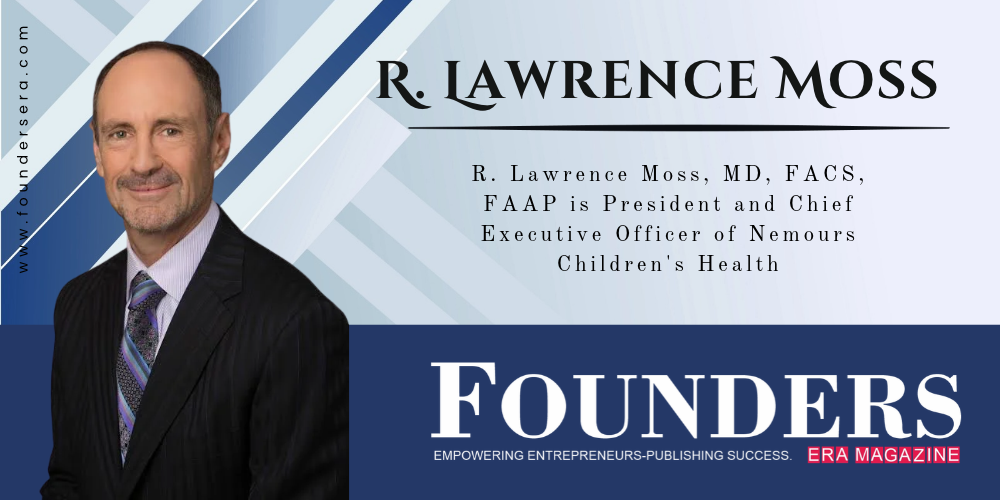
R. Lawrence Moss, MD, FACS, FAAP, President and CEO of Nemours Children’s Health, has built his leadership vision around this broader understanding of health. With more than 25 years of experience as an academic surgeon and physician executive, Dr. Moss has focused on changing how healthcare organizations define success and deliver care to children.
His method goes against the grain of the traditional approach in which the success of healthcare is based on how many patients, procedures, and hospital services are carried out. He emphasizes a more effective approach that focuses on health outcomes, prevention, and other elements that affect the welfare of a child outside the medical institution.
Nemours Children’s Health specializes in pediatric primary care, urgent care, specialty care, and hospital care. Their overall mission allows them to make connections between medical care and research, education, community collaboration, and family support.
In light of rising healthcare costs and increasing health issues among children, this represents a key perspective for the future of pediatric care. Dr. Moss’s leadership shows us why hospitals need to do more than just treat diseases to keep children healthy.
1. R. Lawrence Moss Is Redefining Pediatric Healthcare
One of the central themes of Dr. Moss’s leadership is the idea that healthcare should focus on creating health, not simply delivering medical services.
Traditional healthcare systems often concentrate on diagnosing conditions, prescribing treatments, and performing procedures. These services are essential, especially for children with serious or complex medical needs. However, they represent only part of what influences a child’s overall health.
Nutrition, education, housing, family circumstances, physical activity, and emotional well-being can all affect childhood development. When these factors are overlooked, families may continue to experience health challenges even after receiving appropriate medical treatment.
Dr. Moss has advocated for a broader model that considers these influences as part of the healthcare system’s responsibility. Nemours describes this philosophy as Whole Child Health. https://www.nemours.org/about/dr-moss-leadership-in-childrens-health.html
The goal is to encourage healthcare organizations to consider the conditions that help children thrive, rather than concentrating exclusively on treating illness after it develops.
Key Differences in Healthcare Approaches
| Traditional approach | Whole Child Health approach |
|---|---|
| Focuses primarily on treating illness | Combines treatment with prevention |
| Measures services and procedures | Places greater emphasis on health outcomes |
| Concentrates on clinical encounters | Considers family and community circumstances |
| Responds to existing health problems | Works to identify risks earlier |
| Primarily operates within healthcare facilities | Encourages collaboration across community services |
This approach does not reduce the importance of hospitals or specialist treatment. Instead, it expands the definition of successful healthcare to include helping children stay healthy in the first place.
2. Making Prevention a Priority in Children’s Health
Prevention is the area that can significantly contribute to people’s long-term health status improvement. In turn, childhood is an especially valuable time period for implementing preventive measures as some health-related behaviors have a long-term effect on individuals’ health status.
It is possible to note that pediatric health examinations, vaccinations, screenings, nutritional guidance, as well as the early detection of health issues, can help people solve these issues even before they become serious.
According to Dr. Moss, the leadership philosophy of which she is the proponent includes the idea that investments in children are necessary for the improvement of the health status of future generations. Therefore, healthcare institutions should take into account not only the treatment of illnesses but also the issue of their prevention.
For instance, when a child has some issues regarding nutrition, the child can require not only a doctor’s visit. Depending on the situation, the family of the patient can need additional help in such areas as nutrition education, community resources, and so on.
Important areas of preventive pediatric care include:
- Routine wellness visits and developmental monitoring.
- Age-appropriate immunization and screening.
- Healthy eating and physical activity.
- Early support for behavioral and emotional health.
- Education that helps parents recognize warning signs.
Preventive programs need to be accessible, evidence-based, and adapted to the needs of individual families. By connecting prevention with everyday healthcare, pediatric organizations can work toward better long-term outcomes.
3. Addressing the Social Factors That Influence Child Health
A child’s health is shaped by more than genetics and medical treatment. Family income, access to nutritious food, stable housing, education, neighborhood safety, and transportation can all influence whether children receive the support they need.
These influences are commonly described as social determinants of health. They can affect access to preventive services, the management of chronic conditions, and the ability of families to follow treatment plans.
Dr. Moss has argued that healthcare organizations must recognize these wider influences if they want to improve population health. Nemours’s Whole Child Health philosophy encourages a broader view of the circumstances affecting children and their families. https://www.nemours.org/about/dr-moss-leadership-in-childrens-health.html
Consider a child who frequently misses medical appointments because the family has difficulty arranging transportation. The clinical team may provide an appropriate treatment plan, but the family still faces a practical barrier to following it.
Addressing such challenges may require collaboration with community organizations, social services, schools, and other local partners.
Social Factors and Their Potential Impact
| Social factor | Possible effect on children | Potential response |
|---|---|---|
| Food insecurity | Difficulties meeting nutritional needs | Connect families with food assistance and nutrition resources |
| Housing instability | Disrupted routines and increased stress | Coordinate with appropriate community support services |
| Limited transportation | Missed appointments and delayed treatment | Explore transport assistance and accessible care options |
| Educational barriers | Challenges understanding health information | Provide clear, family-friendly education |
| Limited access to behavioral health services | Delayed support for emotional concerns | Improve screening and referral pathways |
Healthcare providers cannot solve every social challenge independently. However, they can identify barriers, connect families with resources, and collaborate with partners working to improve community well-being.
This wider perspective helps explain why pediatric healthcare leadership increasingly involves cooperation beyond the hospital environment.
4. Supporting Innovation in Pediatric Care
Innovation within the field of healthcare does not include only new medical instruments and new surgical procedures. Innovation involves new ways of organizing processes, communicating with families, using information, and delivering medical assistance.
The setting provided by Nemours Children’s Health can be characterized by the possibility of interaction between clinical skills, medical education, research, and innovation.
Under Dr. Moss’s management, the organization has managed to introduce a more comprehensive vision of children’s health, and inspire the healthcare professionals to search for innovative ways of prevention and delivering healthcare services.
The digital health applications can prove useful within this approach if they are implemented correctly. Patient portals, virtual appointments, electronic health records, and organized communication system may prove to be useful for families trying to access services and interact with the teams providing assistance.
Technology should solve some problem and not be the problem by itself. There should be some consideration of privacy issues, clinical safety, accessibility, and specific needs of children at different ages.
How Innovation Can Support Pediatric Healthcare
| Innovation area | Application | Potential benefit |
|---|---|---|
| Telehealth | Remote consultations when clinically appropriate | Greater convenience for families |
| Digital patient tools | Access to appointments and health information | Improved communication |
| Clinical research | Evaluation of new treatments and care approaches | Stronger evidence for clinical decisions |
| Data-informed planning | Identifying patterns in service use and outcomes | Better resource allocation |
The success of healthcare innovation depends on whether it improves care in practice. Organizations must evaluate new approaches using appropriate clinical, operational, and patient-experience measures.
5. Strengthening Research and Academic Medicine
Medical research plays a critical role in improving treatments, understanding childhood diseases, and developing new approaches to complex conditions.
As an academic surgeon and physician executive, Dr. Moss brings experience from clinical practice and academic healthcare leadership. His career has included work in pediatric surgery, research, and healthcare quality and safety. Nemours’s leadership profile highlights his more than 25 years of experience in these areas. https://www.nemours.org/about/leadership/larry-moss.html
Academic pediatric health systems have an opportunity to connect research findings with clinical practice. They can also support the education of medical students, residents, fellows, nurses, and other healthcare professionals.
This connection is important because children can respond differently to diseases and treatments than adults. Pediatric research must account for growth, development, age-specific risks, and the needs of families.
A strong research environment also encourages collaboration between clinical teams, scientists, universities, and other institutions.
Key priorities include:
- Evaluating treatments through rigorous clinical research.
- Improving standards for quality and patient safety.
- Training future pediatric healthcare professionals.
- Sharing evidence that can strengthen clinical practice.
- Exploring new approaches to childhood disease prevention.
Research does not automatically lead to better outcomes. Findings must be evaluated carefully and translated into practice when supported by sufficient evidence. Nevertheless, sustained investment in pediatric research is essential to advancing care.
6. Building Stronger Partnerships With Families and Communities
Parental and caregiver involvement is essential in ensuring good healthcare for children. They have the primary role of deciding on issues such as scheduling of appointments, medications, nutritional practices, routines, and managing conditions.
This necessitates a more elaborate strategy in ensuring good pediatric healthcare. It should include understanding the concerns of the families, communicating about treatment plans and options in ways that are understandable, and recognizing the environment in which children live.
The whole child approach proposed by Dr. Moss provides a framework that calls for healthcare organizations to take into account the greater needs of children and their families.
Partnerships with the community could enhance this process. Various organizations including the schools, social welfare institutions, public health departments and community organizations could help in ensuring the well-being of children.
For instance, cooperation with the schools could help in providing health education and identifying problems that influence attendance or development. Community partnership could also be useful in helping families find preventive services and any other form of assistance they might need.
Hospitals could foster these partnerships through enhancing the clarity of information, referring to various sources and listening to families’ views regarding obstacles in getting good health.
Three important points
Clear communication: Explain diagnoses, treatment plans, and follow-up instructions in language families can understand.
These steps can help create a more connected healthcare experience in which families understand their options and know where to seek support.
7. Encouraging a More Sustainable Healthcare System
The other key element in Dr. Moss’s healthcare philosophy includes looking at the financial incentives that drive healthcare provision.
Traditional payment models have payments tied to service delivery. It may be hard to invest in activities that prevent disease and reduce expenses. Dr. Moss has suggested that there could be changes in incentives to focus on health outcomes. Under such an approach, healthcare organizations would be encouraged to invest in prevention and coordination services.
This theme has been covered by Nemours as it seeks to redefine health among children and families. https://www.nemours.org/about/dr-moss-leadership-in-childrens-health.htmlThere are challenges associated with changing payment systems. There needs to be proper measure selection, addressing the variance in individual needs, and ensuring the new payment model does not affect the delivery of healthcare to seriously ill children.
A workable system should promote quality healthcare while enabling access among families facing financial and social challenges.
Priorities for a More Sustainable Pediatric Health System
| Priority | Leadership action | Intended result |
|---|---|---|
| Prevention | Invest in early identification and wellness | Reduce avoidable health problems |
| Quality measurement | Track meaningful clinical outcomes | Improve accountability |
| Care coordination | Connect services across settings | Reduce gaps in care |
| Community investment | Work with local organizations | Address wider health needs |
| Financial alignment | Evaluate outcome-focused payment models | Support long-term sustainability |
The broader challenge is to create a system in which clinical quality, financial responsibility, and children’s well-being reinforce one another.
Read More: Founders Era
The Future of Pediatric Healthcare Under R. Lawrence Moss
The future of pediatric healthcare will depend on how effectively organizations respond to changing medical needs, emerging technology, financial pressures, and the social factors influencing childhood development.
Dr. Moss’s leadership philosophy places children’s long-term well-being at the center of this discussion. His focus on Whole Child Health encourages hospitals to look beyond immediate treatment and consider the conditions that help children thrive.
Several priorities are likely to remain important for pediatric health systems:
- Expanding access to preventive and primary care.
- Supporting children’s behavioral and emotional health.
- Using digital tools responsibly.
- Strengthening clinical research and medical education.
- Improving coordination between hospitals and community services.
- Evaluating success through meaningful health outcomes.
These priorities require long-term commitment and collaboration across many sectors. No single hospital or healthcare leader can address every challenge affecting children, but healthcare systems can play an important role by building partnerships and changing how they define success.
Conclusion
Dr. R. Lawrence Moss has contributed to healthcare leadership in pediatrics by adopting Whole Child Health, prevention, research, and external factors affecting the health of the children.
He has promoted the idea that healthcare institutions need to aim to provide much more than care to sick children by promoting healthiness and helping parents find the necessary resources to take care of the child.
In this way, an important possibility arises, which is to combine outstanding medical service with prevention and community involvement.
Pediatric healthcare leaders in the future cannot solely rely on their clinical abilities. They have to learn how to cooperate, innovate responsibly, allocate the resources properly, and understand each child as a part of the bigger picture, which includes the family and community.
The most valuable achievement in the field of pediatrics will be achieved when healthcare organizations help their patients to reach better outcomes and grow into healthier people.
Read More: Founders Era