John Couris: Transforming Tampa General Hospital
Introduction
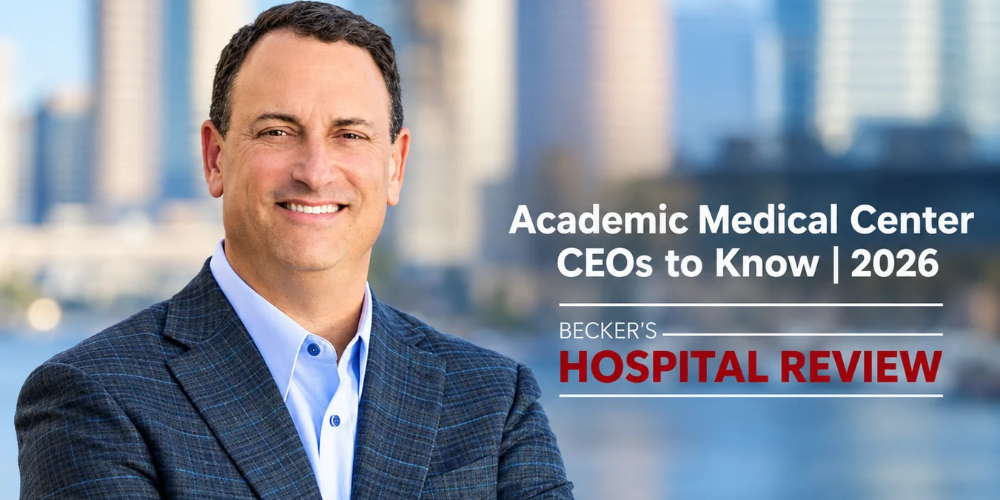
Healthcare leadership is about much more than managing hospital operations. It requires a clear vision, a commitment to patients, and the ability to prepare an organization for the challenges of tomorrow. John Couris, President and CEO of Tampa General Hospital, has become a prominent example of how strategic leadership can support the transformation of a modern healthcare system.
Since joining Tampa General Hospital in 2017, Couris has helped guide the organization through significant expansion, technological innovation, and changes in how healthcare services are delivered. His work has focused on strengthening academic medicine, improving access to specialized care, developing research partnerships, and creating a workplace culture that supports both patients and healthcare professionals. Source: Tampa General Hospital
His leadership comes at a time when hospitals face rising costs, growing demand for specialized treatment, workforce pressures, and increasing expectations from patients. Healthcare organizations must balance financial sustainability with quality, safety, and accessibility.
Under Couris’s leadership, Tampa General Hospital has pursued a strategy that combines clinical excellence with innovation and collaboration. His approach provides an interesting example of how hospital leadership can influence patient experiences, organizational performance, and the future of healthcare delivery.
1. John Couris and the Growth of Tampa General Hospital
John Couris has played an important role in expanding Tampa General Hospital’s reach across Florida. Rather than focusing exclusively on the main hospital campus, the organization has developed a broader network of services designed to bring care closer to patients.
This expansion includes hospitals, outpatient facilities, urgent care services, virtual health offerings, and hospital-at-home care. According to Tampa General Hospital’s leadership profile, its network has grown to more than 150 care locations, supported by approximately 15,000 team members and providers.
The strategy reflects a wider change in healthcare. Patients increasingly need coordinated services that extend beyond traditional hospital visits. Follow-up appointments, rehabilitation, preventive care, and remote consultations all contribute to the overall treatment experience.
By developing a connected network, Tampa General can pursue a more integrated approach to patient care while strengthening its presence throughout the region.
, Key Areas of Organizational Growth
| Strategic area | Main objective | Potential patient benefit |
|---|---|---|
| Hospital network | Expand access to specialized services | More options for treatment |
| Outpatient care | Provide services outside inpatient settings | Greater convenience |
| Virtual health | Connect patients with care teams remotely | Easier access to consultations |
| Home-based care | Support eligible patients at home | Treatment in a familiar setting |
| Academic medicine | Connect care, education, and research | Access to specialized expertise |
Growth alone does not guarantee better healthcare. The important challenge is to ensure that expanded services maintain consistent standards of quality, safety, and patient experience.
2. Advancing Healthcare Innovation Through Technology
Technology is becoming an essential part of modern hospital management. From patient scheduling to clinical decision support, digital systems can help healthcare professionals make better use of information and resources.
Couris has supported Tampa General’s investment in technology-enabled care coordination. One example is its Care Coordination Center, which uses artificial intelligence, predictive analytics, and operational data to help teams coordinate patient care and hospital resources.
The organization initially developed this capability with GE HealthCare and has continued its technology strategy through a partnership with Palantir. The goal is to build a more connected healthcare system that can use information to improve care coordination and operational efficiency.
For example, a hospital may need to coordinate available beds, staffing, patient transfers, and discharge planning at the same time. Better access to operational information can help teams identify delays and make more informed decisions.
However, technology should support clinical judgment rather than replace it. Hospitals must also protect patient privacy, monitor system performance, and ensure that digital tools are useful to the people who rely on them.
How Technology Can Support Hospital Operations
| Technology | Healthcare application | Intended value |
|---|---|---|
| Artificial intelligence | Identify patterns in clinical and operational data | Better-informed decisions |
| Predictive analytics | Anticipate changing patient and resource needs | More proactive planning |
| Connected data systems | Share relevant information across teams | Improved coordination |
| Digital workflows | Simplify routine administrative processes | Less avoidable manual work |
The larger lesson from John Couris’s approach is that successful healthcare innovation requires more than purchasing new technology. It depends on connecting technology to real clinical and operational needs.
3. Making Patient-Centered Care a Priority
A hospital’s performance should not be measured only by its size, reputation, or financial results. Patients also need timely treatment, clear communication, safe care, and support throughout their recovery.
Patient-centered care places these needs at the heart of organizational decisions. Under Couris’s leadership, Tampa General has worked to expand access to services and improve the coordination of care across different settings.
This approach is particularly important for patients managing complex illnesses. They may interact with several specialists, diagnostic departments, rehabilitation providers, and follow-up teams. When these services work together effectively, patients can experience a more coordinated journey.
Hospital leaders can support this goal by examining patient feedback, monitoring safety measures, reducing unnecessary delays, and making sure staff have the resources required to provide effective care.
Three important priorities include:
- Accessibility: Helping patients reach appropriate services without unnecessary barriers.
- Coordination: Improving communication among clinical teams and care settings.
- Experience: Listening to patients and responding to their concerns.
These priorities also require ongoing measurement. Hospitals need to evaluate whether new programs are producing meaningful improvements rather than assuming that every initiative will automatically benefit patients.
4. Expanding Hospital-at-Home Services
One of the important developments associated with Tampa General’s strategy is TGH at Home. Developed with Shields Health Innovations, the program provides hospital-level care to eligible patients in their homes when clinically appropriate.
Traditional hospital treatment remains essential for many medical conditions. However, some patients may be suitable for home-based care with appropriate clinical supervision, monitoring, and support.
Hospital-at-home programs can offer a different care experience by allowing selected patients to receive treatment in familiar surroundings. They may also help healthcare organizations use inpatient resources more effectively when patients can safely be treated outside the hospital.
The model requires careful patient selection, reliable monitoring, access to clinicians, and clear procedures for responding when a patient’s condition changes.
Comparing Traditional and Home-Based Hospital Care
| Factor | Traditional hospital care | Hospital-at-home care |
|---|---|---|
| Treatment location | Hospital facility | Patient’s home |
| Clinical supervision | Hospital-based teams | Coordinated home-care team |
| Patient environment | Clinical setting | Familiar home environment |
| Suitability | Depends on clinical needs | Limited to eligible patients |
| Resource requirements | Inpatient beds and hospital staff | Home-care logistics and monitoring |
Hospital-at-home services are not appropriate for every patient or every condition. Their effectiveness depends on clinical safety, patient eligibility, staffing, and the ability to provide rapid escalation when additional care is needed.
For hospital leaders, the opportunity is to develop flexible care models without compromising the standards patients expect from a major healthcare institution.
5. Strengthening Academic Medicine and Medical Research
Tampa General Hospital’s relationship with the University of South Florida Health is an important part of its identity as an academic health system. This partnership connects patient care with medical education, clinical expertise, and research.
Academic medicine plays a significant role in developing future healthcare professionals and supporting the evaluation of new treatments and clinical practices. It can also help bring specialized expertise to patients who require complex care.
Couris has supported the development of the Tampa Medical & Research District in collaboration with USF Health and regional partners. The initiative aims to strengthen the area’s position as a destination for clinical care, research, education, and biotechnology.
The value of this approach extends beyond individual facilities. A strong medical research environment can encourage collaboration between clinicians, scientists, universities, technology companies, and emerging healthcare businesses.
| Research priority | Why it matters |
|---|---|
| Clinical research | Evaluates treatments and care approaches |
| Medical education | Prepares the next generation of healthcare professionals |
| Biotechnology | Encourages the development of new medical solutions |
| Academic partnerships | Connects expertise across institutions |
| Innovation investment | Supports promising healthcare ideas |
Building a research district takes long-term planning and sustained investment. Its success ultimately depends on the quality of research, collaboration among institutions, and the ability to translate discoveries into meaningful improvements in patient care.
6. Building a Strong Workplace Culture
Healthcare organizations depend on thousands of professionals working together under demanding conditions. Doctors, nurses, technicians, administrators, and support staff all influence the quality of the patient experience.
For this reason, workplace culture is a major part of effective hospital leadership. Couris has promoted an approach known as AKTiVe, which emphasizes authenticity, kindness, transparency, vulnerability, and empathy.
These principles encourage leaders to communicate openly, listen to employees, acknowledge challenges, and recognize the human side of working in healthcare. Tampa General has also reported strong employee engagement results, reflecting its focus on workplace experience. Source: Tampa General Hospital
A supportive culture does not eliminate the pressures associated with healthcare work. Instead, it can help create an environment where employees feel more comfortable raising concerns, contributing ideas, and working together to solve problems.
Important elements of a positive hospital culture include:
- Open communication: Making it easier for staff to share feedback.
- Professional development: Helping employees strengthen their knowledge and skills.
- Recognition: Acknowledging contributions across different roles.
- Empathy: Understanding the challenges faced by patients and staff.
- Accountability: Connecting leadership decisions with measurable responsibilities.
When these principles are consistently applied, they can support teamwork, staff engagement, and a stronger organizational commitment to patient safety.
Read More: Empowering Leadership and Healthcare Transformation – The Journey of Dr. Carolyn M. Rubin
7. Preparing Tampa General Hospital for the Future
Healthcare continues to evolve as new technologies emerge, patient expectations change, and medical organizations face financial and workforce challenges.
Couris’s long-term leadership strategy reflects the importance of preparing hospitals for these changes instead of responding only after problems arise. Tampa General’s investments in care coordination, digital capabilities, academic partnerships, and new care settings demonstrate several ways an organization can prepare for the future.
In 2023, the hospital’s board announced a ten-year extension of Couris’s employment agreement, providing continuity for its long-term strategic direction. The announcement emphasized innovation, financial stability, organizational culture, and continued development of the academic health system.
Future priorities for major health systems are likely to include more connected patient information, responsible use of artificial intelligence, stronger cybersecurity, expanded access to specialized care, and better integration between hospital and community services.
The challenge is to balance ambition with evidence. New programs must be evaluated for clinical outcomes, affordability, safety, and their impact on patients and employees.
Future Priorities for Healthcare Leaders
| Priority | Leadership focus | Desired outcome |
|---|---|---|
| Responsible AI | Governance, oversight, and clinical validation | Safe technology adoption |
| Financial sustainability | Efficient use of resources | Long-term organizational stability |
| Patient access | Flexible care delivery and regional partnerships | More accessible services |
| Workforce development | Training and employee engagement | A capable, supported workforce |
| Research collaboration | Partnerships between medicine and science | Continued clinical advancement |
These priorities show why healthcare leadership requires a combination of strategic thinking, practical execution, and a willingness to learn from results.
Conclusion
John Couris represents a leadership approach that connects healthcare innovation with organizational culture, academic medicine, and patient access. At Tampa General Hospital, his work has included expanding the care network, investing in technology-enabled coordination, developing home-based care, and strengthening partnerships with USF Health and other organizations.
These initiatives illustrate how hospital leadership can help shape the delivery of healthcare beyond the walls of a single hospital. They also highlight the importance of ensuring that growth and innovation remain connected to clinical quality, patient safety, employee engagement, and responsible resource management.
As healthcare systems continue to change, the most effective leaders will be those who combine a clear long-term vision with measurable results and a commitment to the people they serve.
The broader lesson from John Couris’s leadership is straightforward: sustainable healthcare transformation depends not on technology or expansion alone, but on bringing people, processes, research, and innovation together around better care.
Read More: Founders Era