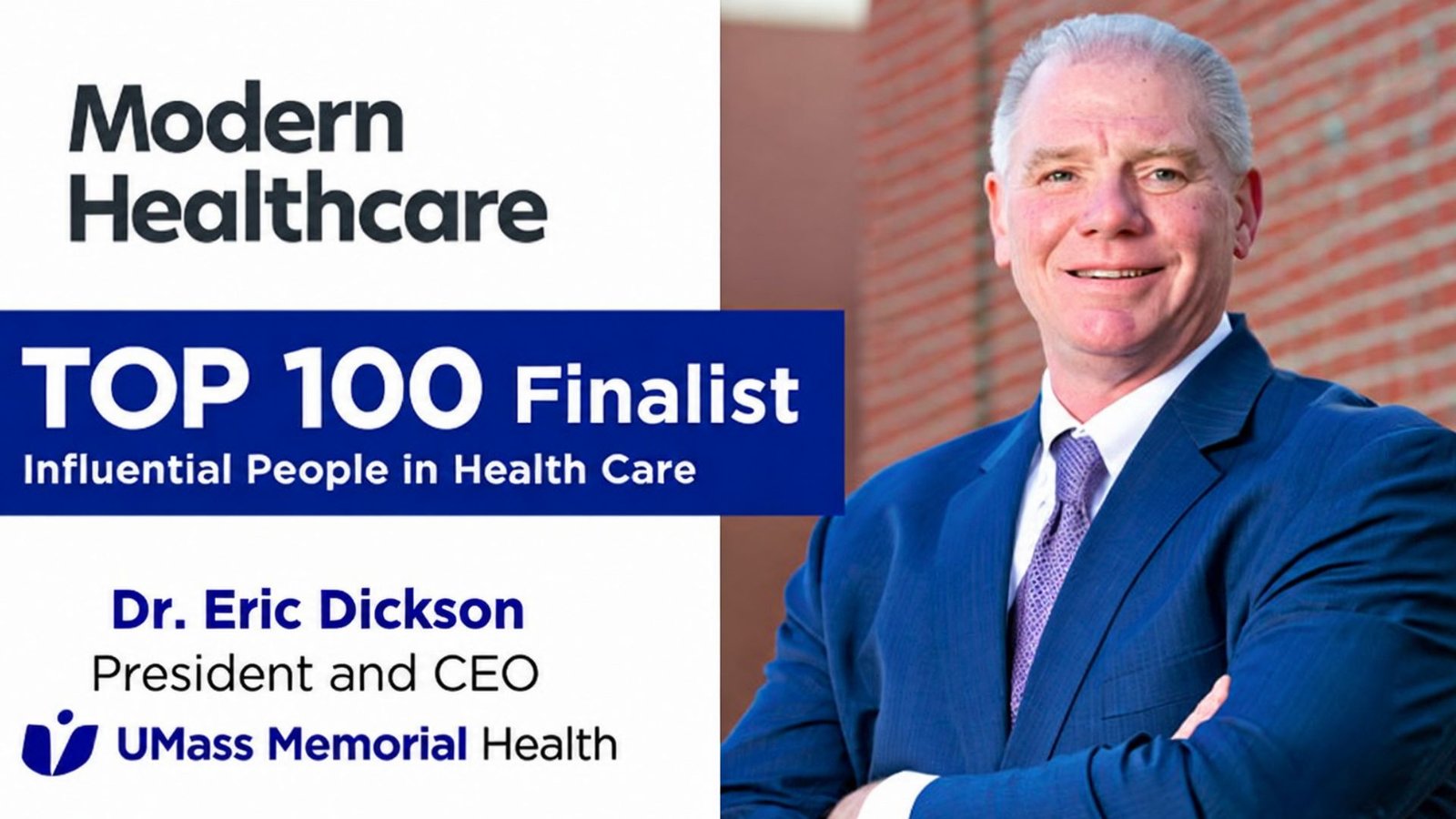
Eric Dickson, MD: Healthcare Transformation Lessons from UMass Memorial Health
Introduction
In the context of increasing needs in terms of improvement in patient care, reduction of costs, healthcare provider support, and increasing accessibility, healthcare organizations are expected to perform in an innovative way. Innovation, in turn, cannot be reduced only to technological advancements and expansion of physical space. In addition to that, innovation is supposed to include wise leadership, collaboration and a deep knowledge of patients’ needs.
Eric Dickson, MD, President and CEO of UMass Memorial Health is a healthcare professional whose experience unites clinical practice, management, and development of a health system. This leader is worth considering to gain insights on how to cope with changing needs of the modern healthcare environment and put patients at the focus of decision-making processes.
Healthcare reform is not one project but a set of tasks aimed at the improvement of processes, the support of healthcare professionals, development of academic medicine, and delivery of services in the most efficient way possible for a community.
Exploring leadership principles characteristic of Eric Dickson and priorities of UMass Memorial Health, healthcare specialists can get an idea of the way to approach these goals.
Who Is Eric Dickson, MD?
Eric Dickson, MD, is the President and CEO of UMass Memorial Health, a prominent health system located in Worcester, Massachusetts. Given his experience in the areas of medicine and health administration, he understands the problems that care delivery teams face as well as issues related to running a complex organization providing healthcare services.
Running an academic health system is associated with multiple functions. Hospitals have to provide quality care, educate doctors, conduct research, take into account financial considerations, and address community needs.
These functions are highly intertwined for a health system like UMass Memorial Health. Clinical activities require qualified specialists, while the results of research can help to develop treatment protocols, and good operations enable access to healthcare services for patients.
This makes Dickson’s case an appropriate example.
1. Build a Clear Vision for Healthcare Transformation
Healthcare transformation is most effective when a leader creates a vision prior to rolling out new programs or technologies. Hospitals have many areas that can be improved upon; however, implementing improvements simultaneously leads to confusion and adds even more stress for healthcare workers.
Establishing a vision will allow teams to recognize what changes are most important and why those changes are relevant to improving healthcare service delivery.
In terms of priorities, healthcare executives need to determine specific and measurable objectives, including decreased wait times, improved coordination of care, increased safety, and greater access. These priorities need to inform decision-making processes throughout the organization, not just serve as talking points for the executives.
With executive leadership, a health system can tie its strategic objectives to the day-to-day activities of its staff.
Key leadership priorities
- Define a small number of meaningful organizational goals.
- Communicate why each priority matters to patients and staff.
- Establish measurable outcomes before launching an initiative.
- Review progress regularly and adjust when results fall short.
A transformation strategy becomes more effective when employees can see how their individual responsibilities contribute to the wider mission.
2. Put Patients at the Center of Every Decision
Hospitals frequently assess their performance based on clinical outcomes, patient satisfaction, wait times, and efficiency. While these are valuable criteria, healthcare leadership that truly meets the needs of its patients also necessitates comprehending the story that lies beneath the metrics.
Individuals might have trouble getting around appointments, understanding what is needed from them, coordinating the process, or finding services near where they live. Even though clinical treatment is correct, the healthcare experience can be stressful due to all these issues.
Patient-centered leadership involves the need for hospitals to view the full picture of how patients go through appointments, treatments, recovery, and aftercare.
In the case of UMass Memorial Health, it is particularly significant since the regional academic health system treats individuals who have various medical needs and access to healthcare.
Some ways leaders can improve patient-centered care include listening to patient complaints, enhancing communication between the hospital and its patients, streamlining the administration of the hospital, and assisting clinicians with coordination.
3. Empower Frontline Employees to Lead Improvement
One of the most notable aspects of Eric Dickson’s leadership journey is the emphasis on involving employees in organizational improvement.
According to UMass Memorial Health’s official innovation overview, when Dickson became CEO in 2013, the organization faced financial challenges, low patient satisfaction, and staff disengagement. Rather than relying exclusively on top-down decisions, the health system encouraged employees to contribute ideas and help shape improvements. UMass Memorial Health
This approach recognizes an important reality: the people who work directly with patients often understand operational problems better than anyone else. A nurse may identify a delay in a discharge process. A registration employee may notice a confusing appointment procedure. A physician may see an opportunity to improve communication between departments. When these observations reach decision-makers, they can lead to meaningful changes.
Why employee involvement matters
| Area | Practical approach | Potential benefit |
|---|---|---|
| Patient flow | Identify unnecessary steps | Fewer delays |
| Clinical processes | Standardize proven practices | Greater consistency |
| Staff experience | Invite feedback and ideas | Stronger engagement |
| Resource management | Reduce duplicated work | Better use of resources |
Employee participation also creates a sense of ownership. Instead of viewing transformation as another management initiative, staff members become active contributors to the organization’s progress.
The lesson for healthcare executives is straightforward: sustainable improvement requires listening to the people who deliver care every day.
4. Use Artificial Intelligence With a Clear Purpose
Artificial intelligence is becoming an important part of healthcare discussions, from medical imaging and documentation to predictive analytics and administrative automation. However, adopting new technology simply because it is available does not guarantee better care.
UMass Memorial Health has described a measured approach to AI adoption. In a June 2026 report highlighted by the health system, Dickson emphasized using AI to address specific problems rather than introducing it prematurely.
This is a useful principle for healthcare transformation. Technology should support a clearly identified need, and its value should be evaluated against practical outcomes. For example, a hospital considering AI-assisted clinical documentation should examine whether the tool reduces administrative burden, supports accurate records, and allows clinicians to spend more time with patients. A predictive system should be assessed for reliability, workflow fit, and potential unintended consequences.
A practical framework for AI adoption
- Identify the problem: Define the operational or clinical challenge before selecting a tool.
- Evaluate the evidence: Review accuracy, privacy, safety, and suitability for the intended setting.
- Test carefully: Begin with an appropriately designed pilot and involve the staff who will use it.
- Measure the results: Track meaningful changes in workflow, quality, cost, and patient experience.
- Scale responsibly: Expand only when the benefits and safeguards are sufficiently demonstrated.
| AI application | Intended use | Important consideration |
|---|---|---|
| Clinical documentation | Reduce administrative workload | Accuracy and clinician review |
| Medical imaging support | Assist with image interpretation | Clinical validation |
| Predictive analytics | Identify potential risks | Data quality and bias |
| Administrative automation | Simplify repetitive tasks | Privacy and workflow integration |
The broader lesson is that healthcare innovation should be driven by results, not hype. Technology is most useful when it solves a real problem and strengthens the work of healthcare professionals.
5. Strengthen Academic Medicine and Collaboration
Academic medical centers play a distinctive role in the healthcare system. They combine complex patient care with medical education, research, and the development of future healthcare professionals.
UMass Memorial Health works in close partnership with UMass Chan Medical School. Its official leadership profile notes that the health system supports the training of more than 700 residents and fellows annually and conducts research in partnership with the medical school.
UMass Memorial Health. This relationship creates opportunities to connect scientific knowledge with practical patient care. Research can inform clinical decisions, educational programs can prepare the next generation of physicians, and clinical experience can help researchers identify questions that deserve further investigation.
Strong collaboration also requires coordination between hospital administrators, physicians, nurses, educators, researchers, and community partners.
| Partnership area | Strategic value |
|---|---|
| Medical education | Develop a skilled healthcare workforce |
| Clinical research | Advance knowledge and treatment |
| Hospital operations | Translate evidence into daily practice |
| Community partnerships | Better understand local health needs |
For leaders like Dickson, the challenge is to ensure that these activities support a shared mission instead of operating as disconnected parts of the organization.
6. Improve Access and Support Community Health
Healthcare transformation must extend beyond the walls of a major hospital. Patients need timely access to primary care, specialty services, emergency treatment, behavioral health support, and follow-up care.
Regional health systems must also understand the barriers that prevent people from receiving appropriate services. These barriers may include transportation, affordability, limited appointment availability, language differences, or difficulty navigating a complicated care system.
UMass Memorial Health’s regional role includes hospitals, outpatient practices, urgent care, and behavioral health services. Its structure reflects the importance of providing different levels of care across the communit
Healthcare leaders can support better access by strengthening referral processes, coordinating care between settings, improving appointment systems, and using digital services where they are appropriate.
The objective is not to move every patient into a digital channel or to centralize every service. It is to offer the right care in the right setting, while preserving access to in-person support when it is needed.
Community health also depends on listening to residents and local organizations. Partnerships can help health systems understand gaps in services and direct resources toward needs that may not be obvious from hospital data alone.
Read More: Jenna Williams | Human-Centered Leadership in Modern Banking
7. Make Continuous Improvement Part of Everyday Work
Transformation is not complete when a hospital launches a new initiative. Lasting progress depends on whether improvements become part of normal operations.
The experience of UMass Memorial Health illustrates the potential of a structured, employee-driven improvement culture. The organization’s published innovation overview reports more than 200,000 frontline ideas implemented, alongside reported financial and quality improvements. These are organizational results, rather than outcomes attributable to any single initiative.
UMass Memorial Health For healthcare executives, the challenge is to maintain that improvement mindset after the initial excitement of a project has passed. A new process may work well in one department but create difficulties elsewhere. A digital tool may reduce one type of workload while adding another. A successful pilot may require further training before it can be adopted across a larger organization.
Continuous improvement means reviewing results, listening to feedback, identifying unintended effects, and making adjustments over time.
| Improvement step | Leadership action | Measure to monitor |
|---|---|---|
| Identify | Find a specific care or workflow problem | Baseline performance |
| Test | Trial a practical solution | Safety and usability |
| Review | Compare results with the baseline | Quality, time, and cost |
| Improve | Address gaps and staff feedback | Consistency of outcomes |
| Sustain | Incorporate changes into standard work | Long-term performance |
This discipline helps prevent transformation from becoming a series of disconnected projects. It also encourages employees to see improvement as part of their professional responsibility.
What Healthcare Leaders Can Learn From Eric Dickson
The leadership approach associated with Eric Dickson offers several practical lessons for executives, hospital administrators, and healthcare professionals.
Set clear priorities
Focus organizational resources on measurable improvements in patient care, access, and performance.
Listen to frontline teams
Involve employees in identifying problems and developing workable solutions.
Adopt technology responsibly
Use AI and digital tools to solve specific problems, with appropriate evaluation and oversight.
Build strong partnerships
Connect clinical care, education, research, and community needs.
Measure and sustain progress
Evaluate whether changes deliver meaningful benefits and continue refining them.
These principles are relevant to healthcare organizations of different sizes. While each institution has its own financial pressures, workforce needs, and patient population, a commitment to practical improvement can help leaders make more informed decisions.
Conclusion: Building a Better Future for Healthcare
Dr. Eric Dickson is a valuable case study of leadership in healthcare because the experience of this leader links the medical practice, organizational management, and systems improvements. The case study of UMass Memorial Health demonstrates the significance of engaging workers, operational improvement, support for academic medicine, and the right use of technology.
Transformation of healthcare should not be based on a big decision or technological breakthrough. Transformation occurs due to the accumulation of actions that improve the process of delivering care.
When healthcare facilities have to face the changes in patient expectations, budgetary restrictions, work force issues, and artificial intelligence developments, it is important to keep these ideas in mind. The most effective transformations will be those that will be based on innovation and responsibility for people.
The main idea that can be taken from Dr. Dickson’s experience by healthcare executives is very simple: progress starts when you know the issue, understand it, listen to those who are closer to it, and measure the effectiveness of your solution.
Read More : Founders Era